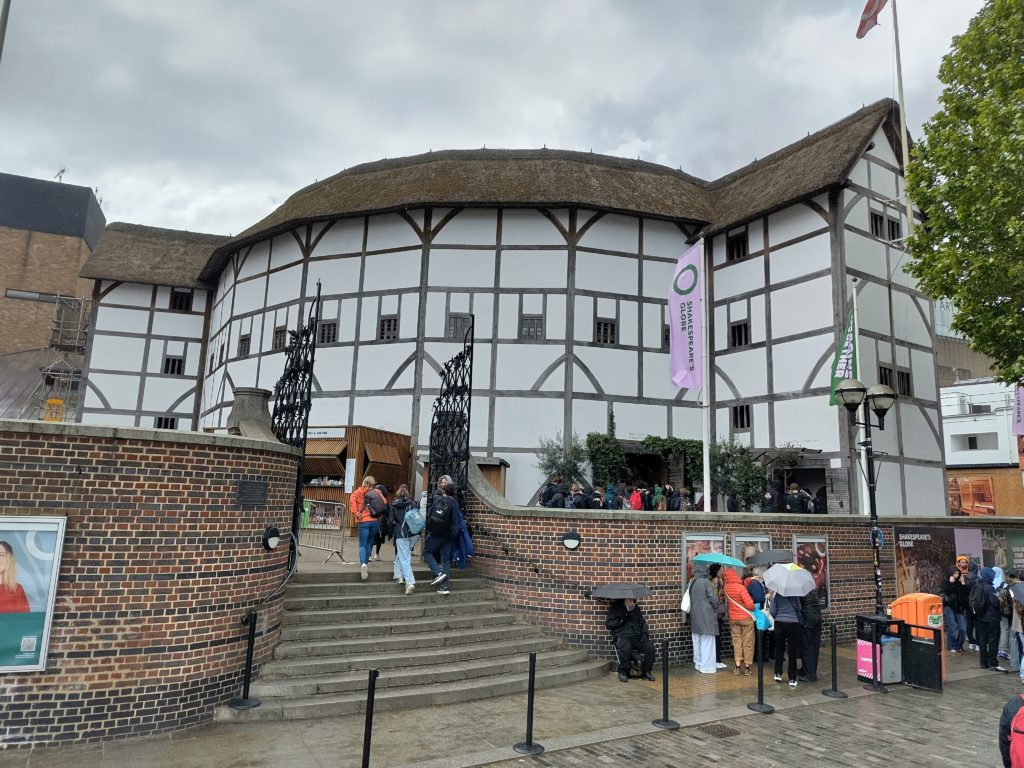
De 12h à 13h nous avons visité le Shakespeare’s Globe à Londres.
Ce théâtre est une reconstruction du célèbre théâtre de William Shakespeare, l’un des plus grands auteurs anglais. Dès l’entrée, le style ancien donne l’impression de revenir à l’époque de Shakespeare.
Pendant la visite, un guide nous a fait découvrir les différentes parties du théâtre tout en nous racontant l’histoire du Globe. Ses explications étaient très intéressantes, car il parlait de la manière dont les pièces étaient jouées à l’époque, sans micro ni éclairages modernes. Grâce à lui, j’ai appris que le théâtre occupait une place très importante dans la société anglaise du XVIᵉ siècle.
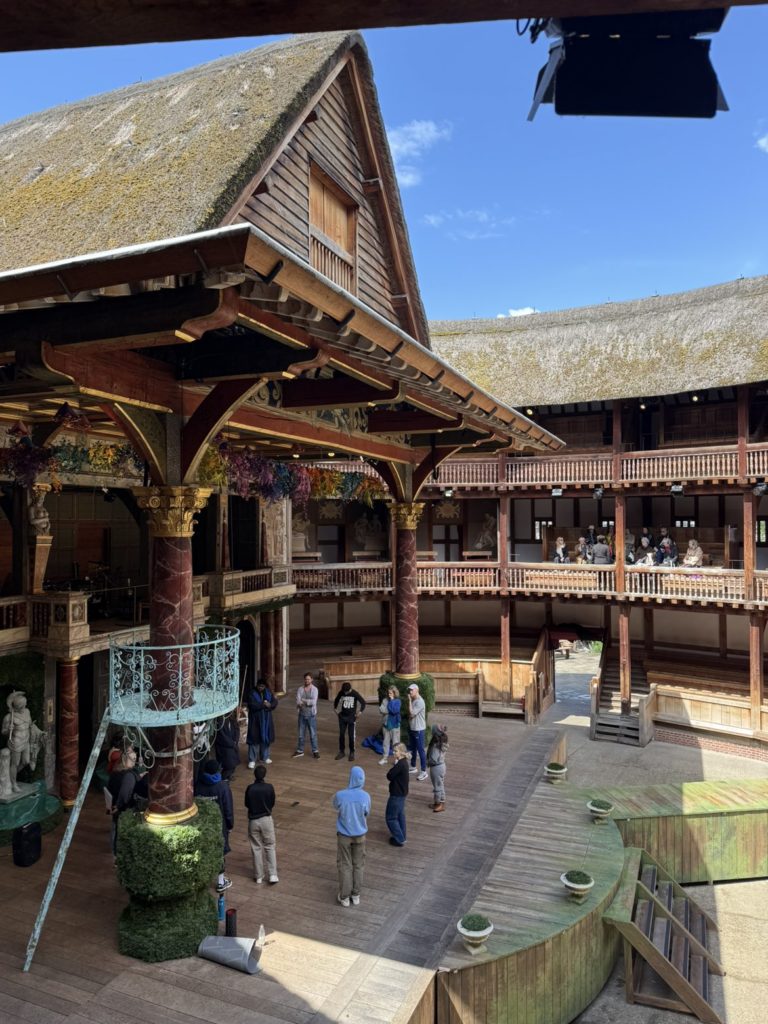
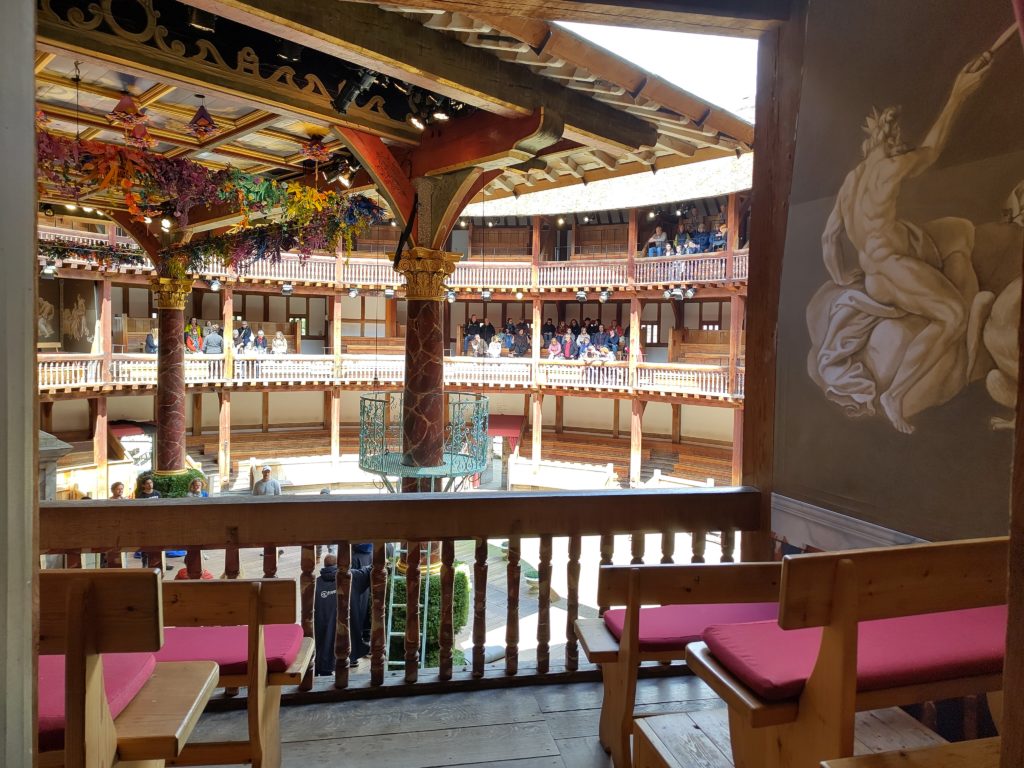
Le guide nous a aussi expliqué l’organisation des spectateurs selon leur classe sociale. Les personnes les plus pauvres regardaient les pièces dans la fosse, juste devant la scène. On les appelait les “Penny-stinkards”. Ils payaient seulement un penny et restaient debout pendant toute la représentation. Les spectateurs plus aisés s’installaient dans les galeries situées aux étages. Ils payaient trois pennies pour avoir une place assise et plus confortable. Les nobles, eux, payaient 6 pennies afin d’obtenir les meilleures places du théâtre. Aujourd’hui, une place debout coûte environ 5 pounds, soit à peu près 6 euros.
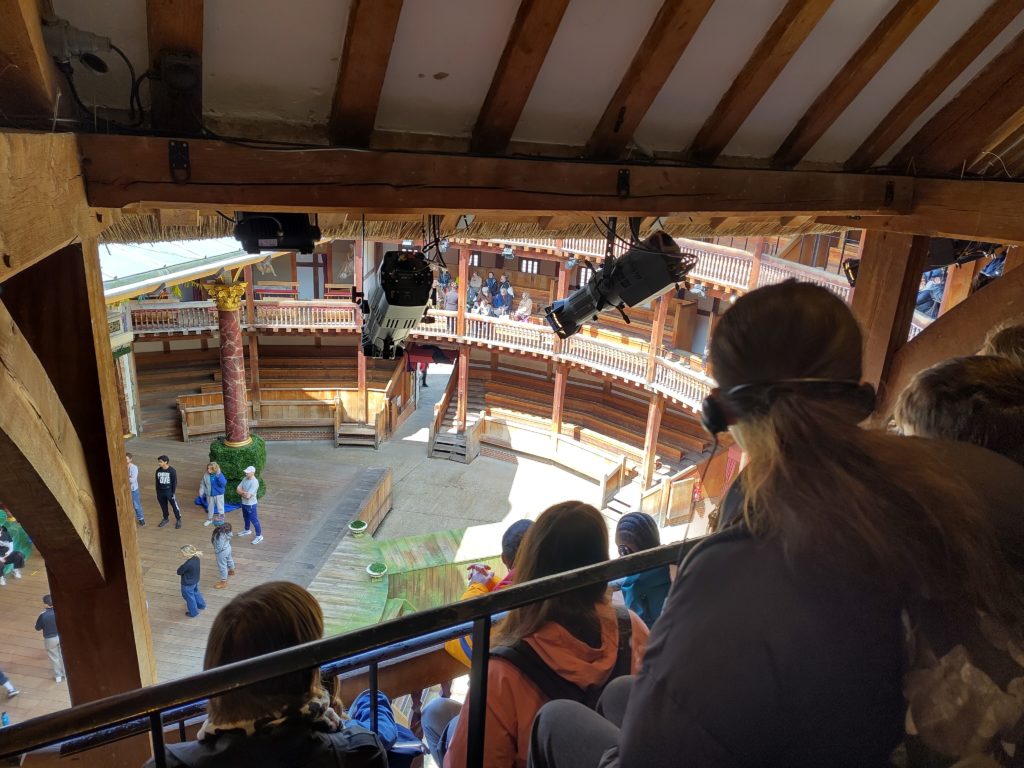
Il y avait des acteurs qui étaient en train de s’échauffer sur scène pendant notre visite. On pouvait les voir répéter leurs gestes et travailler leur voix avant la représentation. Cela rendait l’expérience encore plus immersive et donnait vraiment l’impression que le théâtre était toujours vivant.
From noon to 1 p.m., we visited Shakespeare’s Globe in London.
This theater is a reconstruction of the famous theater of William Shakespeare, one of the greatest English playwrights. From the moment you enter, the old-fashioned style gives the impression of stepping back into Shakespeare’s time.
During the tour, a guide showed us the different parts of the theater while telling us the history of the Globe. His explanations were very interesting, as he talked about how plays were performed at the time, without microphones or modern lighting. Thanks to him, I learned that the theater held a very important place in 16th-century English society.
The guide also explained how the audience was seated according to their social class. The poorest people watched the plays in the pit, right in front of the stage. They were called « penny-stinkards. » They paid only one penny and remained standing for the entire performance. Wealthier spectators sat in the galleries located on the upper levels. They paid three pennies for a more comfortable seat. Nobles, on the other hand, paid six pennies for the best seats in the theater. Today, a standing ticket costs around 5 pounds, or roughly 6 euros.
There were actors warming up on stage during our visit. We could see them rehearsing their gestures and working on their voices before the performance. This made the experience even more immersive and truly gave the impression that the theater was still alive.